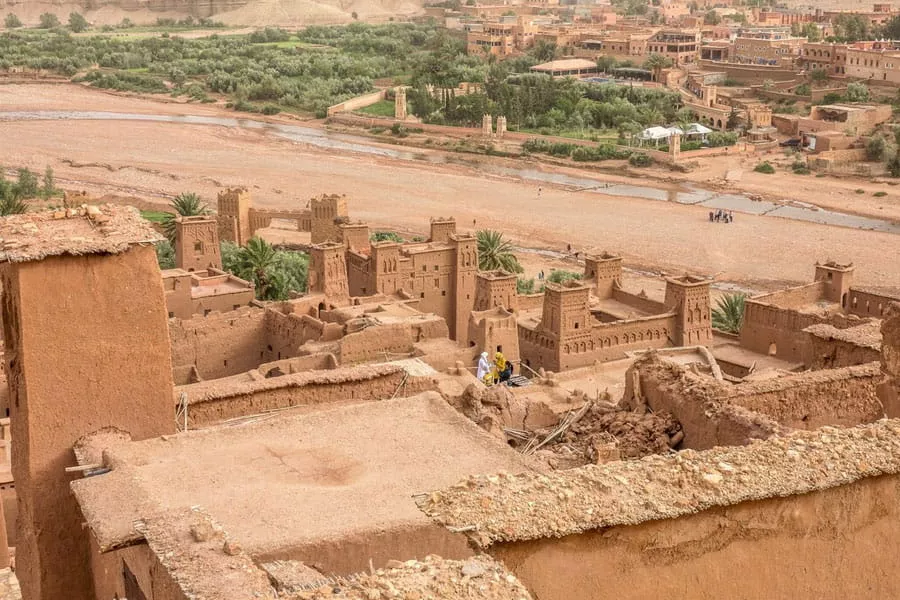
Iraq is at the center of ancient human civilization. Certainly, it is generally referred to as the cradle of history. In addition, the territories along the Tigris and Euphrates rivers influenced the development of early writing, legislation, religion, and architecture. Therefore, Iraq is the place where a traveller can have the most incredible historical trip ever. The historical sites Iraq narrate the tales of a nation whose age is older than that of most states.
But, many tourists do not appreciate Iraq’s cultural richness. However, to history enthusiasts, archeologists, and academics, the country is a treasure trove. This guide discusses the most popular historical places in Iraq and explains why they are important to preserve today.
Why Is Iraq the World Centre of History?
Iraq was formerly Mesopotamia, the dwelling place of Sumerians, Akkadians, Babylonians, and Assyrians. As a result, the region influenced human development. Here, there was the development of writing systems, mathematics, and early cities. Thus, numerous historical sites in Iraq can be considered world-changing discoveries.
Besides, Iraq relates ancient history to Islamic heritage. Because of this, the visitor can visit pre-biblical ruins and medieval Islamic architecture in the same journey. The country’s rich history is rare. Therefore, Iraq landmarks are a source of attraction for historians worldwide.
Babylon: The Legendary City
Babylon is among the best-known historical sites in Iraq. The city was situated close to modern-day Hillah and used to control the ancient world. In addition, it was the capital of the Babylonian Empire.
The Ishtar Gate, the city walls, and the temples’ ruins still exist today. Moreover, Babylon is associated with the Hanging Gardens, one of the Seven Wonders of the World. Thus, it is one of Iraq famous landmarks. Babylon is a symbol of power, innovation, and ambition, even in its ruins.
Ur: City of Cradle of Civilization
Ur is one of the oldest cities ever found. Moreover, it is believed to be the home of Prophet Abraham. It is dominated by the Great Ziggurat of Ur, which represents the early religious constructions.
Due to its age, Ur is the epicenter of the study of early urban life. As a matter of fact, it is still among the most researched historical sites in Iraq. Ur is a landmark often included in lists of places tourists interested in ancient Iraq’s religion and rule must visit.
Nineveh: The Assyrian Capital
Nineveh was once the capital of the Assyrian Empire. Its ruins today lie near Mosul. Despite being wrecked by war, its historical value is enormous.
Assyrian power is still evident in the massive walls of cities and palaces, as well as in relief carvings. Thus, Nineveh holds a prominent position among historical sites in Iraq. In addition, ongoing restoration work is intended to conserve this important site. Its enthusiasts regard it as one of the most important historical sites in Iraq.
The Arch of Taq Kasra and Ctesiphon
Ctesiphon was the capital of the Parthian and Sassanian empires. Today, it still stands with its huge arch, called Taq Kasra. In fact, it is the world’s largest single-span brick arch.
The structure is enormous, so every visitor is impressed. It is also a symbol of ancient engineering perfection. Consequently, it is among the most prominent Iraqi constructions and a crucial destination for architectural historians.
Samarra: The Islamic Architectural Tradition
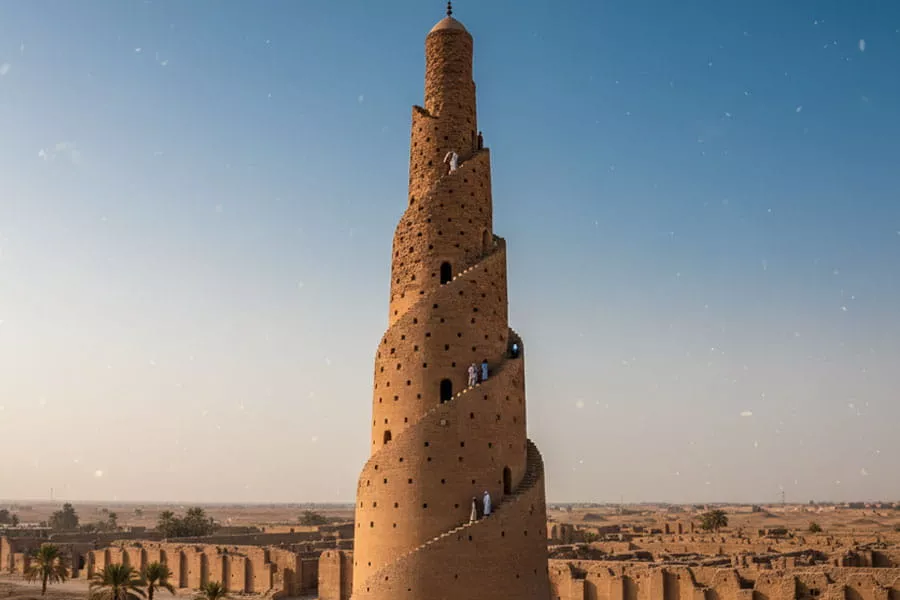
Samarra boasts of the Great Mosque and spiral minaret. Constructed in the 9th century, it was once a symbol of Islamic might. Moreover, the city is a UNESCO World Heritage Site.
The Malwiya Minaret is one of the most famous historical locations in Iraq. Besides, Samarra links Iraq’s ancient past to its Islamic identity. Thus, it remains one of Iraq famous landmarks today.
Najaf and Karbala: Holy Historical Cities
Najaf and Karbala are highly religious and historical. Every year, millions of pilgrims visit. The Imam Ali Shrine in Najaf is a spiritual leader. In the meantime, the martyrdom of Imam Hussein is denoted by Karbala.
These cities are combined by their faith and history. Thus, they become central places in the history of Iraq. In addition, the architecture and cultural influence of these sites render them important historical sites in Iraq that are not just about religion.
Hatra: A City of Empires in the Desert
Hatra was a prosperous Roman-Persian trading city at the time. Its stone temples and walls are, even to this day, impressive. Due to its conservation, it is a UNESCO World Heritage Site.
The combination of the eastern and western styles makes Hatra unique. So, it is still one of the most distinctive historical locations in Iraq. Many historians have regarded it as one of the best-preserved sites in Iraq.
Erbil Citadel: Living History
The Citadel of Erbil is located on a hillock in northern Iraq. Imperatively, the people have resided there for thousands of years. Consequently, it is one of the oldest occupied locations on earth.
The generations of life can be traced in its mud-brick houses and narrow streets. As such, it is critically important as one of Iraq landmarks. Tourists have called it a living museum and a center of renowned sites in Iraq.
Saving the Iraqi Historical Identity
Despite the warfare and destruction, Iraq is preserving its heritage. The country is in the process of restoration work. In addition, international bodies favor conservation. It is also due to responsible tourism. When tourists pay a respectful visit, they contribute to the conservation of the historical sites Iraq values. This moderate approach will ensure that these invaluable sites in Iraq’s history are preserved for future generations.
In the mid-way preparation for such culturally enriching trips, the services of seasoned planners such as Jett Travel enable travelers to follow routes responsibly without infringing on Iraq’s heritage.
Iraq’s history shaped the contemporary world. Here, laws, cities, and systems of writing began. Hence, these locations are not only Iraqi treasures. They belong to humanity. These monuments all narrate a tale of ingenuity and determination. Additionally, the study of historical landmarks in Iraq enriches the rest of the world. Iraqi landmarks offer unmatched views for people seeking meaning in their travels.
For those ready to explore responsibly, Iraq offers unforgettable experiences. With proper planning and respect, travelers can witness history where it began. Jett Travel remains committed to guiding culturally aware travelers toward meaningful journeys through Iraq’s legendary past.
Contact Us (708) 424-1900Latest Post
- A Complete Guide to Visiting Casablanca, Morocco’s Modern Jewel
- Travel to Casablanca: Best Food, Culture & Experiences in 2026
- Travel to Qatar: Exploring Doha & Beyond
- Travel to Dubai: Ultimate Guide to Attractions, Shopping & Nightlife
- How to Plan Your Trip to Cairo: Best Time to Visit and Safety Tips
- Travel to Cairo: Top Attractions, Hidden Gems and Local Tips
- Egypt Travel Advisory: Safety, Warnings, and Everything You Need to Know Before Visiting
- Is It Safe to Travel to Dubai? A Complete Safety Guide for Tourists
- Historical Places in Iraq: Exploring the World’s Oldest Landmarks
- Everything You Need to Know Before Visiting Baghdad, Erbil & Beyond

 5716 West 87th Street, Burbank, IL, 60459
  (800) 613-0200
 sales@jett-travel.com